
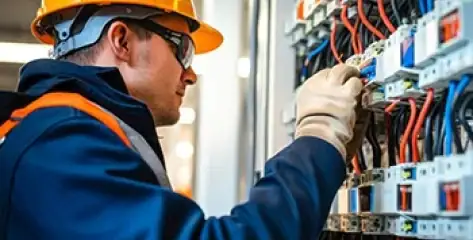
In the electrical industry, soldering is used to connect metal joints and support fuses, terminals, and contactors under constant electrical load. Fusion, Inc. has supported electrical soldering and brazing needs since 1933, growing from a family-owned paste supplier into a full-service provider of custom alloys and automated joining equipment.
Below, we’ll explore how soldering and brazing serve electrical manufacturing, the applications where each process fits best, and the advantages automation brings to production lines.
Soldering in the Electrical Industry
Electrical soldering joins metal parts with molten filler metal using a filler metal (solder) and precise temperature management. The solder flows into the joint and cools to form a strong, electrically conductive bond. Heating temperatures are controlled based on the application, which can protect delicate electrical components from thermal damage.
When soldering electrical wire, fuses, terminals, or small assemblies, technicians need an alloy with dependable conductivity and a melting point that won’t stress surrounding parts. Fusion Inc. offers lead, lead-free, and low-temperature soldering paste alloys to match these requirements. We can blend formulations that work with metals common to electrical manufacturing, such as copper, brass, aluminum, and stainless steel.
Brazing in the Electrical Industry
Brazing in the electrical industry contributes to joint strength. The process heats a joint above 840 °F (449 °C) with a nonferrous filler metal. This creates strong, lasting bonds that are critical for electrical parts or assemblies that face repeated mechanical stress or higher current loads. Brazing can be used to bond dissimilar metals, such as copper to brass or copper to steel.
In addition to brazing paste alloys, Fusion provides automated brazing machinery that can apply filler metal, flux, and heat in a repeatable cycle. Automated brazing removes the guesswork from manual torch work and can deliver a consistent, void-free seal across units.
Common Electrical Applications
Soldering and brazing show up across many types of electrical hardware. Common applications can include:
- Fuses
- Contact carriers and assemblies
- Terminals
- Contactors
Parts like these benefit from a joint that can hold up to current flow, vibration, and repeated thermal cycling. Fusion’s soldering paste alloys and brazing paste alloys adapt to parts of different sizes and shapes, with formulations lending to consistent application.
Advantages of Soldering and Brazing in the Electrical Industry
Soldering and brazing paste alloys from Fusion deliver the ingredients for a strong joint. These can be custom blended to support specific service requirements, such as optimizing conductivity or thermal management.
Automated brazing and soldering machines from Fusion can be used to dispense filler metal and flux in exact, measured amounts. This means an operator can produce finished joints efficiently while maintaining consistent quality across units. Electrical soldering completed by machine also reduces material waste and labor costs, since the paste dispenses only where the joint needs it.
Contact Fusion Inc. to Learn More
Soldering and brazing each play a role in building electrical components that hold up over years of service. The right process, backed by the right equipment, protects your parts and your production schedule. Fusion, Inc. has provided custom soldering and brazing solutions for electrical manufacturers for decades. Our custom formulations and automation solutions can contribute to high-efficiency joining for the specific application.
Contact us today to discuss your project or request a consultation to review your requirements.